“Keep Moving Forward: How to Build Unstoppable Momentum”


> “Motivation gets you started. Habit keeps you going.” —Jim Rohn

Starting strong is easy. Staying strong is the real challenge.

We all begin with excitement — a new goal, a new plan, a new vision. But somewhere along the way, life gets busy, energy dips, and that fire begins to fade.

So the question is: how do you keep going when motivation wears off?
The answer lies in building momentum that sustains itself — not relying on mood, but on systems, purpose, and consistency.


Let’s talk about how to stay in motion, even when it’s tough.


1. Remember Why You Started

When your energy fades, your “why” refuels you.
Go back to the reason you began this journey. What did you want to change? Who did you want to become?

> “When you feel like quitting, think about why you started.”


🔹 Action Step:
Write down your original “why” on paper — and read it every morning.
If the reason still excites you, your momentum will reignite.


2. Focus on Progress, Not Perfection

Perfection kills momentum.
Success isn’t about doing everything perfectly — it’s about showing up consistently.

> “Small progress each day adds up to big results.”


When you celebrate progress, you create energy. Each small win reinforces that you’re moving forward — and that’s what keeps the fire alive.

Example:
Think about a plane. It uses most of its fuel just to take off — but once it’s in the air, it flies smoothly with far less effort.
Momentum in life works the same way: the hardest part is starting. After that, it’s about steady progress.

🔹 Action Step:
At the end of each day, write down three small wins.
They’ll remind you that even on tough days, you’re moving forward.


3. Build Routines That Run on Autopilot

Momentum thrives on structure.
When your habits are in place, you don’t have to rely on willpower — your system does the work for you.


> “You will never change your life until you change something you do daily.” —John C. Maxwell


Example:
If you go to the gym every day at 7 a.m., you won’t debate whether to go — it becomes a rhythm.
If you review your goals every morning, it’s no longer a chore — it’s just who you are.

🔹 Action Step:
Create a 15-minute “momentum routine.”
Something simple, repeatable, and consistent — like journaling, planning your day, or reviewing your goals.


4. Surround Yourself with Energy

Momentum is contagious.
When you’re around people who are moving, dreaming, and achieving — you can’t help but be pulled forward.


> “You are the average of the five people you spend the most time with.” —Jim Rohn


Example:
Think of a marathon. Runners often speed up when surrounded by others moving at a faster pace.
The same happens in life — your environment either fuels your progress or drains it.

🔹 Action Step:
Identify one person who inspires you — and connect with them this week.
Energy multiplies when shared.


5. Use the Power of Review and Reflection

Momentum isn’t about doing more — it’s about doing better.
Sometimes you need to pause to realign, not to quit.

> “Rest if you must, but don’t you quit.” —John Greenleaf Whittier


Reflection helps you spot what’s working, what’s not, and what needs to change. That’s how you adjust your direction without losing your drive.

🔹 Action Step:
Once a week, review:

What moved you forward this week?

What slowed you down?

What can you improve next week?


That simple check-in keeps you aware and in control.


6. Reward Progress — Celebrate Your Wins

When you celebrate, you reinforce success.
It trains your brain to associate effort with satisfaction, which helps you keep going.

> “What gets rewarded gets repeated.”


Example:
Give yourself small rewards — a quiet day off, a special treat, or a personal celebration — whenever you hit milestones.
You’ll find that celebrating progress keeps the journey fun.

🔹 Action Step:
Pick one milestone you’ll celebrate this month — and decide now how you’ll reward yourself when you reach it.


Final Thoughts: Keep Moving, Even When It’s Hard


Momentum is built through discipline, not emotion.
It’s not about feeling like it — it’s about doing it until it feels natural.

There will be days you don’t want to keep going. That’s normal. But remember this:

> “Success doesn’t go to the most talented. It goes to the most consistent.”


Your Challenge This Week:


1. Reconnect with your “why.”


2. Focus on small wins daily.


3. Protect your routines and your energy.


Keep moving forward.
Momentum builds mastery — and mastery builds success.

Cash Flow: The Silent Power Behind Every Thriving Business


In business, not everything that matters makes noise.
Sales make noise. Growth makes noise. Even marketing makes a lot of noise.

But behind all that — quietly holding everything together — is cash flow.

It doesn’t grab attention, but it decides everything.
You can have great sales, loyal customers, and even solid profits on paper… but if your cash doesn’t flow, your business doesn’t move.


As Warren Buffett said it best:

> “Never take your eyes off the cash flow because it’s the lifeblood of business.”


What Cash Flow Really Means


Cash flow is simple — it’s the money moving in and out of your business.

Cash in: customer payments, sales, or investments.

Cash out: rent, salaries, suppliers, software, and all the little things that add up.


Profit tells you how well your business performs.
Cash flow tells you whether your business can survive while performing.


Why Cash Flow Is Your Quiet Advantage


Here’s the truth:
Cash flow gives you options. Options give you freedom. Freedom gives you power.

When your cash flow is healthy, you make decisions confidently — not reactively.

You can take bold steps, negotiate better deals, and invest in growth.

You sleep better at night because you’re not one slow client payment away from panic.


Cash flow may not sound exciting, but it’s what separates businesses that look good from those that last long.


The Common Cash Flow Mistakes


Let’s be honest — most businesses don’t fail because of a bad idea. They fail because the money stopped moving.

Here’s where they slip up:

Invoices go out late.

Clients pay even later.

Expenses grow faster than sales.

No one’s tracking what’s actually in the bank until it’s too late.


A business doesn’t collapse overnight — it slowly suffocates from lack of cash.


How to Strengthen Your Cash Flow (Without Fancy Tools)


1. Invoice faster. Don’t wait until Friday or month-end. Do it now.


2. Collect earlier. Offer small discounts for early payment.


3. Negotiate better. Ask suppliers for 45-day terms instead of 30.


4. Track weekly. A simple spreadsheet beats a beautiful surprise.


5. Build a buffer. Aim for at least three months of expenses in cash reserves.


Cash flow management is not about being an accountant — it’s about being aware.


Quick Reality Check


Grab a notebook and answer this:

Do you know your current cash position today?

How long does it take your customers to pay you?

If income stopped tomorrow, how long could you keep going?


If any answer makes you pause — that’s your focus area for the week.


The Hard Truth


Research shows that lack of cash flow is a major reason for many small businesses failure, because of poor cash flow management, they weren’t profitable.

You can have the best product, the best people, and even the best purpose… but without cash flow, the engine stops.


Final Thought


Cash flow doesn’t shout, but it speaks volumes.
It’s the quiet force that fuels every move, every decision, and every opportunity.

Protect it. Track it. Respect it.

Because when cash flows smoothly, your business grows steadily — and you lead confidently.


As Peter Drucker once said:

> “The best way to predict the future is to create it.”

The Success Mindset: How to Think Like a Winner

If there’s one thing I’ve learned about success, it’s this: everything begins in your mind.
Before you build the business, close the sale, or reach the goal — you have to build the belief that it’s possible for you.

> “You become what you think about most of the time.” —Brian Tracy

Your mindset is the foundation of every result in your life.
Winners don’t think the same way everyone else does.
They train their minds to focus on growth, solutions, and action — no matter what happens around them.

Let’s talk about what it really means to think like a winner.

1. Winners Take Full Responsibility

People who succeed don’t waste time blaming circumstances, luck, or other people.
They look at the situation and ask:
“What can I learn here? What can I do differently next time?”

Taking responsibility doesn’t mean blaming yourself — it means taking back your power.
You can’t control everything, but you can control your effort, attitude, and decisions.

> “The day you take complete responsibility for your life is the day you start to the top.” —O.J. Simpson

Action Step:
✍️down one area of your life that frustrates you. Then list three specific actions you can take this week to move it forward.

2. Winners Focus on Possibility, Not Limitation

Anyone can point out problems.
Winners focus on what’s possible. They train their minds to look for solutions instead of excuses.

When you ask, “How can I make this work?” instead of “Why won’t this work?” — your brain starts finding answers.

A Story:
When Walt Disney was told his idea for a theme park would fail, he simply said, “It’s kind of fun to do the impossible.”
He saw opportunity where others saw obstacles — and that’s why his dream still lives on decades later.
Action Step:
Catch yourself when you say “I can’t.”
Replace it with “How can I?” and write down three possible solutions — no matter how small they seem.

3. Winners Expect Success Before They See It

You can’t achieve something you don’t believe in.
Winners expect success. Not because they’re arrogant, but because they’re confident they’ll figure it out along the way.

> “Whether you think you can or you think you can’t, you’re right.” —Henry Ford

That belief shapes behavior — and behavior creates results.

Action Step:
Every morning, say to yourself:
“I expect good things to happen for me today.”
It sounds simple, but you’re training your brain to look for opportunity instead of problems.

4. Winners Turn Setbacks Into Fuel

Every champion you admire has failed — more than once.
The difference? They didn’t let failure define them. They used it as feedback.

> “I have not failed. I’ve just found 10,000 ways that won’t work.” —Thomas Edison

Edison didn’t see failure; he saw progress.
Every attempt brought him closer to success.

Action Step:
Think about a recent setback.
Ask yourself: What did it teach me?
If you extract the lesson, the failure stops being a loss — it becomes leverage.

5. Winners Feed Their Minds Daily

Success is 80% mindset and 20% mechanics.
If you constantly feed your mind with negative input, you’ll make negative decisions.
If you fill it with ideas, inspiration, and learning — you’ll rise higher.

> “Your input determines your outlook, and your outlook determines your outcome.” —Zig Ziglar

Action Step:
Create your own “Success Diet” this week:

Read or listen to something uplifting every morning.

Unfollow one negative influence.

Surround yourself with people who push you to grow.

Final Thoughts: Think Like a Winner, Act Like One

Success isn’t reserved for a special few. It’s available to anyone willing to think differently, act boldly, and keep moving forward — even when it’s hard.

> “Winners form the habit of doing things losers don’t like to do.” —Albert E.N. Gray

Your Challenge This Week:

1. Take full responsibility for one area of your life.

2. Focus on what’s possible.

3. Feed your mind with positive input every day.

Change your thinking, and everything else begins to shift.
You don’t wait for confidence — you create it.
You don’t wait for luck — you build momentum.
That’s what it means to have the success mindset.

Categorizing Products: Cash Cows, Stars, Dogs, and Question Marks

Not all products in a business portfolio are equal. Some drive growth, some generate steady profit, and others quietly drain resources. To manage wisely, businesses must learn to categorise their products — and one of the most practical frameworks for this is the BCG Matrix, developed by the Boston Consulting Group in the 1970s.

As management guru Peter Drucker once said:

> “There is nothing so useless as doing efficiently that which should not be done at all.”

In other words: don’t waste time on products that don’t create value.

The Four Categories of Products

The BCG Matrix classifies products based on market growth rate (high or low) and market share (high or low). Here’s how it breaks down:

1. Stars

High market growth, high market share

These are your rising champions. They require heavy investment but can become future cash cows.

Example: The iPhone was once Apple’s “star” — growing rapidly in a booming smartphone market.

2. Cash Cows

Low market growth, high market share

Mature, stable products that generate consistent profits with little need for reinvestment. They “fund” the rest of the business.

Example: Microsoft’s Office Suite — not flashy, but a reliable profit engine.

3. Question Marks (or Problem Children) ❓

High market growth, low market share

These products have potential but are uncertain. They require big investments, and the risk is high — they can either turn into Stars or fall into Dogs.

Example: Electric scooters for ride-sharing companies — a hot market but no guaranteed winners.

4. Dogs

Low market growth, low market share

These products generate little profit and tie up resources. Often best to divest or discontinue.

Example: Blockbuster’s DVD rentals in the streaming era — a declining product in a shrinking market.

A True Story: Kodak’s Missed Categorisation

Kodak dominated photography with its “cash cow” film business. But when digital cameras (a “star” market at the time) emerged, Kodak dismissed them. Instead of investing in the question mark product it had pioneered, it clung to its cash cow. The result? Bankruptcy in 2012.

The lesson: Failing to move resources from cash cows into stars/question marks can kill even market leaders.

Why This Framework Matters

Helps businesses allocate resources wisely.

Highlights when to invest, maintain, harvest, or divest.

Prevents over-dependence on one product line.

Fact: According to Bain & Co., companies that actively manage their product portfolio outperform peers by 30% in long-term shareholder returns.

Quick Exercise: Categorise Your Products

1. List your products/services.

2. For each, ask:

Is my market growing fast or slowly?

Do I hold a high or low share of that market?

3. Place them in the four categories: Stars, Cash Cows, Question Marks, Dogs.

Reflection: Are you putting enough investment into Stars and Question Marks? Are you harvesting Cash Cows? Are you still holding onto Dogs out of habit?

Going Beyond BCG: Other Categories to Consider

While the BCG Matrix is powerful, businesses today sometimes use additional lenses:

Rising Stars – Emerging products with strong early signals.

Niche Players – Small market but loyal following.

Innovation Bets – Future-focused projects not yet in the market.

These extensions give nuance to modern industries where disruption moves quickly.

Final Thought

Not all products deserve equal love. Some need heavy investment, some should be milked, and some should be let go. The art of business is knowing where to place your bets.

As Warren Buffett famously said:

> “The difference between successful people and really successful people is that really successful people say no to almost everything.”

By categorising your products wisely, you say “yes” only where it matters most.

Success Leaves Clues: The Blueprint is Already in Front of You


Here’s something I’ve learned over the years: success isn’t a mystery. It’s not hidden in secret formulas or locked away in the hands of a lucky few. The truth is simple—success leaves clues.

If you want to get in better shape, there are clues. If you want to grow your income, there are clues. If you want to build a stronger mindset, there are clues. Other people have done it before, and they’ve left behind breadcrumbs for us to follow.


> “If you want to achieve success, find someone who has achieved it before you, and model what they do.” —Tony Robbins


A Personal Realization


I remember a time when I felt stuck, working harder but not moving closer to my goals. Then I started studying people I admired—leaders, entrepreneurs, authors—and it hit me: they weren’t guessing their way through life. They followed patterns. They had routines. They were intentional.

The more I paid attention, the more I realized that excellence is not an accident. It’s built on small, consistent choices that compound over time.

Stories That Prove It


Michael Jordan was cut from his high school basketball team. Instead of quitting, he studied what the best did, practiced relentlessly, and turned failure into fuel. His clue? Discipline beats talent when talent doesn’t work hard.

Oprah Winfrey grew up in poverty, but she studied broadcasting, honed her communication skills, and connected with people in a way no one else could. Her clue? Use your voice and authenticity as your strength.

Warren Buffett didn’t become the world’s greatest investor by chasing trends. He studied businesses deeply, invested in what he understood, and stayed patient. His clue? Master the basics and stick with them long-term.


The Three Biggest Clues Success Always Leaves


1. Habits: Success is hidden in the little things you do daily—reading, learning, planning, practicing.


2. Mindset: Winners think differently. They expect challenges, but they push through them.


3. Action: At some point, you have to stop planning and start doing. Action always beats hesitation.


Here’s the challenge I’ll leave you with today:

Think of one person you admire. Write down three things they do consistently that get them where they are. Then, start doing just one of those things this week.

It doesn’t have to be big. Small clues lead to big results if you follow them long enough.


Final Thought


Success doesn’t whisper—it shouts. The clues are all around us, left behind by those who came before. The only question is: Will you pay attention and follow them?


> “Success is not something you chase. It’s something you attract by becoming the person who deserves it.” —Jim Rohn

The Value Creation Chain: Building Businesses That Last

At the heart of every successful business lies one simple truth: value creation. Without creating value, there are no customers, no sales, and ultimately, no profit. The value creation chain explains how businesses design, deliver, and capture value in a connected flow of activities.

As Michael Porter, the strategist who developed the idea of the “value chain,” once said:

> “Competitive advantage grows out of the way a company organizes and performs discrete activities.”

Understanding your value creation chain means understanding exactly how your business turns ideas into outcomes that customers love—and are willing to pay for.


What Is the Value Creation Chain?


The value creation chain is the step by step process of how a business:

1. Creates Value – through innovation, products, services, or experiences.

2. Delivers Value – by making those products/services available effectively.

3. Captures Value – by monetising and reinvesting for growth.

It’s not just about the final product—it’s about every touchpoint, from sourcing raw materials to after sales service.

From Commodity to Premium Brand


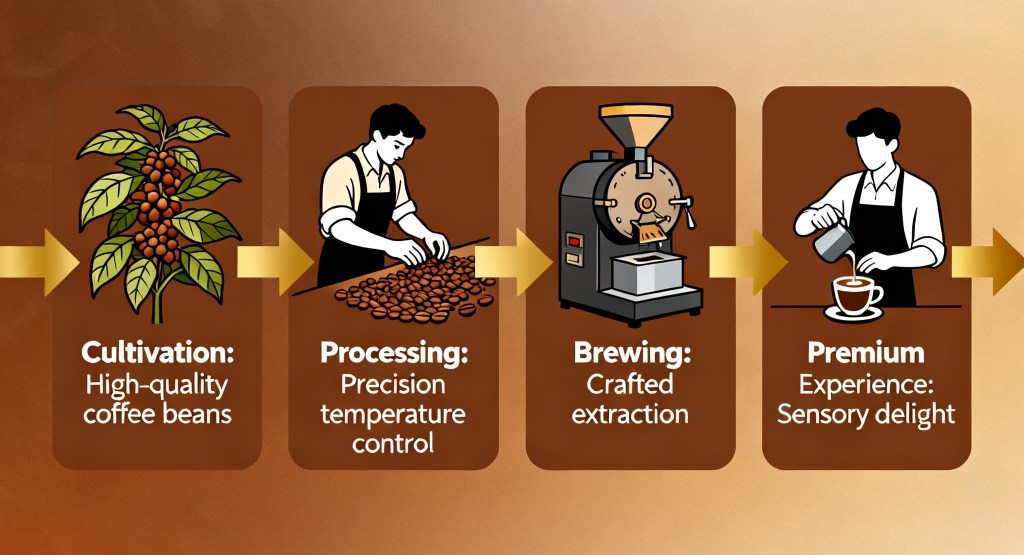
Take coffee as an example. Coffee beans are a commodity—sold cheaply by weight. But Starbucks built a global empire by reimagining the value creation chain:

Create Value – Not just coffee, but an “experience.”
Deliver Value – Comfortable stores, friendly baristas, consistent branding.
Capture Value – Customers pay a premium for a crafted coffee experience.

By elevating each step of the chain, Starbucks transformed a commodity into a lifestyle product.


The Components of a Value Creation Chain


1. Inbound Logistics – How raw materials or inputs are sourced.
Example: A clothing company choosing sustainable fabrics.

2. Operations – The process of turning inputs into finished goods/services.
Example: Toyota’s lean manufacturing system, which maximizes efficiency and reduces waste78.

3. Outbound Logistics – How the product gets to the customer.
Example: Amazon’s hyperefficient delivery system ensures rapid order fulfillment910.

4. Marketing & Sales – Communicating value and persuading customers.
Example: Nike’s powerful branding campaigns create global demand.

5. Service – Support and followup that enhance customer loyalty.
Example: Apple’s Genius Bar enhances continual support.


Why Value Creation


Clarity – It shows where your business actually adds value.
Efficiency – It reveals bottlenecks and wasted effort.
Differentiation – It highlights areas where you can stand apart.
Profitability – Strong value creation chains drive sustainable profits.


Quick Exercise: Map Your Value Creation Chain


1. Write down each step from idea to customer delivery in your business.
2. For each step, ask:
How much value does this add for the customer?
Can we improve or innovate here?
3. Circle one area where improvement could have the biggest ripple effect.

For example:
A consultant might realise they add enormous value in the “service” stage through ongoing support, and could monetise it with a retailer.
A retailer might see that “outbound logistics” (delivery times) is hurting value, and invest in faster shipping.


Research by leading business consultancies confirms: companies that continually optimize their value chains often report sharper improvements in efficiency and profitability than those who do not. While specific margin improvements can vary by industry and initiative, operational value chain improvements are a core driver of sustainable growth.


Final Thought


The value creation chain is more than a business model—it’s the DNA of how you serve customers and generate profit. By strengthening every link, you not only deliver better outcomes but also build resilience, loyalty, and longterm growth.


As Steve Jobs once said:

“You’ve got to start with the customer experience and work back toward the technology—not the other way around.”


Start with value, build the chain around it, and the profits will follow.

The Job Satisfaction Wheel: A Practical Guide to Fulfillment at Work

We spend nearly a third of our lives at work. Yet, how often do we stop and ask ourselves: Am I truly satisfied with my job?

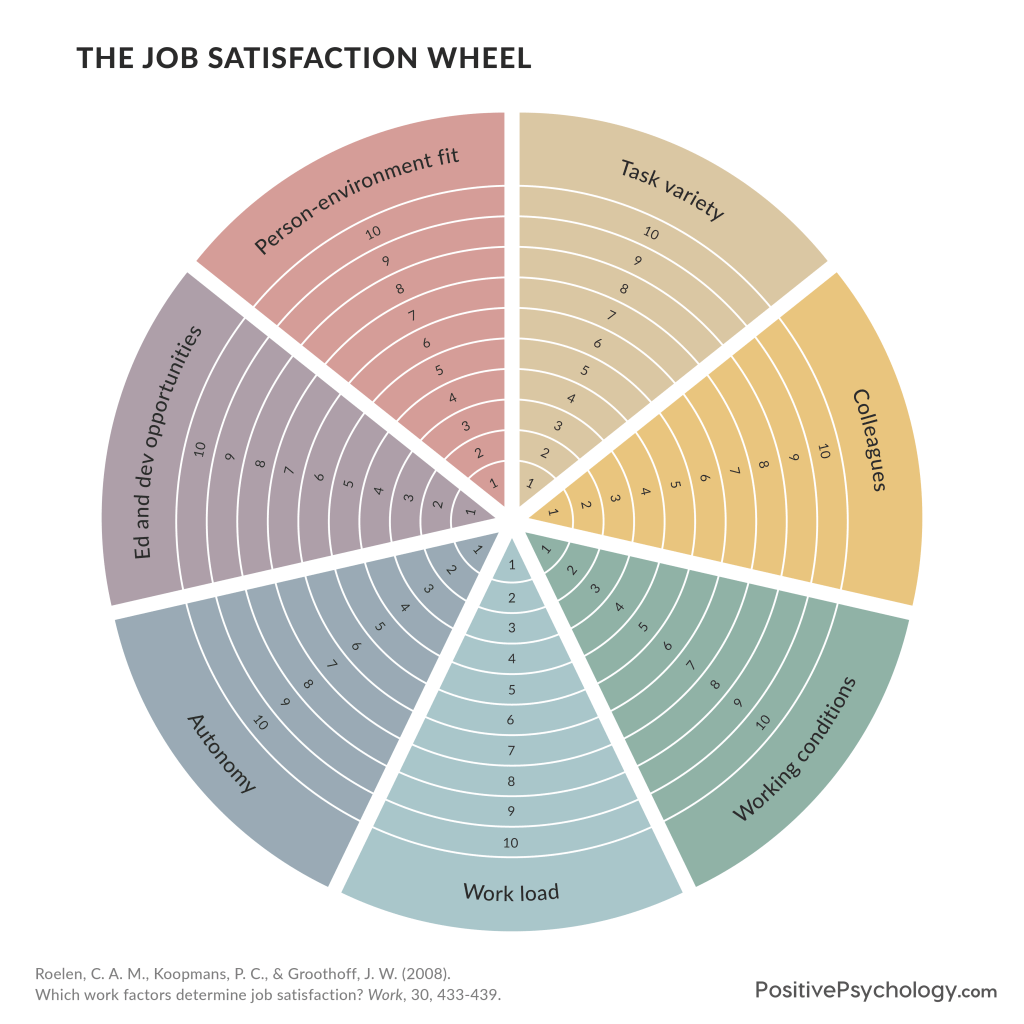
The Job Satisfaction Wheel is a simple yet powerful tool that helps answer that question.

It breaks down job satisfaction into eight key areas:

Person-environment fit

Task variety

Colleagues

Working conditions

Workload

Autonomy

Education and development opportunities

Overall alignment

Instead of seeing job satisfaction as one big, vague feeling, the wheel allows you to examine it from multiple perspectives.

Why Job Satisfaction Matters

Job satisfaction isn’t just about feeling good—it impacts productivity, creativity, and even health. Studies show that employees who are satisfied at work are 12% more productive (University of Warwick, 2015). Conversely, low job satisfaction is linked to higher stress, burnout, and turnover.

As Richard Branson once said:

> “Take care of your employees, and they’ll take care of your business.”

When job satisfaction is high, both the individual and the organisation win.

How to Use the Job Satisfaction Wheel

Here’s a simple exercise you can try:

1. Print the Wheel or Draw Your Own
Rate each area of job satisfaction from 1 (very low) to 10 (very high).

2. Look for Imbalances
Notice which areas are strong and which are weak. A lopsided wheel often explains why your work “doesn’t feel right.”

3. Choose One Focus Area
Ask yourself: If I improved just one of these areas, which would make the biggest difference?

4. Take a Small Action
For example:

If “Colleagues” scored low → schedule a coffee chat with a teammate.

If “Task variety” scored low → ask for a new type of assignment.

If “Education and development” scored low → look into a short course or workshop.


Quick Reflection Exercise

Grab a notebook and complete these prompts:

The part of my work that energises me most is…

The part of my work that drains me most is…

One small change I can make this month to increase my satisfaction is…

Doing this monthly helps track progress and ensures job satisfaction is something you actively shape, not something that just happens to you.

Final Thoughts

The Job Satisfaction Wheel is not about achieving a perfect “10” in every area—it’s about balance, awareness, and action. By regularly checking in with yourself, you can spot early warning signs of burnout, make intentional career choices, and create a work life that sustains you.

As Maya Angelou wisely said:

> “Success is liking yourself, liking what you do, and liking how you do it.”

Job satisfaction isn’t a luxury—it’s the foundation of a meaningful and sustainable career.

Understanding Areas of Specialisation in Business

In business, no company can be everything to everyone. The most successful businesses identify what they do best and focus on it. This is where the idea of areas of specialisation comes in.

What Are Areas of Specialisation?

Areas of specialisation are simply the parts of business where an organisation develops deep expertise. Instead of trying to cover everything broadly, a business chooses to focus its resources on particular strengths. This focus allows the business to stand out, deliver better results, and build a clear identity in the market.

As management thinker Peter Drucker once said:

> “Do what you do best, and outsource the rest.”


This timeless advice still rings true—specialisation sharpens a company’s value and makes it more efficient.

Why They Matter

Specialisation is not just about narrowing down—it’s about sharpening your edge. Some key benefits include:

Clarity – Customers know exactly what you stand for.

Credibility – You become known as the expert in your field.

Efficiency – Your processes improve when you focus on one area.

Competitive Advantage – A specialised business is harder to copy than a generalist.

As Steve Jobs famously put it:

> “Innovation is saying no to a thousand things.”


Choosing a focus isn’t a weakness; it’s a strength that allows a business to deliver exceptional value.

Examples of Business Specialisation

There are many ways businesses can specialise. Here are a few common areas:

1. Product or Service Expertise
Becoming highly skilled in delivering one type of product or service.

2. Customer Segments
Focusing on a specific type of customer, such as small businesses, families, or high-net-worth individuals.

3. Industry Niches
Serving a single industry or vertical, such as real estate, education, or healthcare.

4. Geographic Markets
Concentrating on a local, regional, or international market.

5. Operational Excellence
Standing out through how you deliver—fast, sustainable, cost-effective, or customised.

6. Technology & Innovation
Mastering a particular technology or approach, such as AI, renewable energy, or automation.

How to Identify Your Own Specialisation

To figure out your best area of focus, ask yourself:

Where do we consistently outperform others?

What problems do our customers most rely on us to solve?

Which market gaps align with our strengths?

Where do we want to position ourselves for the future?

Final Thought

Specialisation doesn’t limit a business—it strengthens it. By choosing to focus on a clear area of expertise, businesses gain clarity, authority, and resilience. The real question isn’t whether to specialise, but how to do it in a way that makes your business stand out and create lasting value.

Success Belongs to the Competent: Why Mastery Wins in Every Field

In a world filled with noise, hype, and shortcuts, there’s one truth that never goes out of style:

“Success belongs to the competent. It is always earned, never given.” —Brian Tracy


Talent is a starting point. Motivation is a spark. But competence—the ability to consistently deliver results—is what separates the good from the great.

This blog post will help you: ✅ Understand why competence is the #1 predictor of success
✅ Learn from real-world stories of mastery
✅ Build your own roadmap to becoming truly competent in your field


What Is Competence—and Why Does It Matter So Much?

Competence means you know what you’re doing, and you do it well—consistently.

Whether you’re a surgeon, software developer, athlete, or entrepreneur, your level of competence determines:

Your credibility

Your income

Your opportunities

Your influence


“Don’t wish it were easier. Wish you were better.” —Jim Rohn


In short: The more competent you are, the more you earn, the more you grow, and the more people trust you.


The Kobe Bryant Standard

Kobe Bryant wasn’t just talented—he was obsessed with becoming competent at the highest level.

He would arrive at the gym at 4 a.m., practicing hundreds of jump shots before his team arrived. He broke down game tape, studied opponents, and refined every angle of his performance.

When a reporter once asked him why he trained so hard, Kobe said:

“I’m not competing with others. I’m competing with what I’m capable of.”


That’s competence. It’s not just about performing well—it’s about becoming so good they can’t ignore you.


3 Reasons Competence Guarantees Success

1. Competence Builds Confidence

When you know you’re great at something, your confidence skyrockets—and so does your performance. Clients, employers, and partners can sense it.


“Confidence comes from competence.” —Brian Tracy


2. Competence Attracts Opportunities

The most competent people don’t chase success—it chases them. Why? Because the market rewards those who deliver excellence, reliably.


3. Competence Creates Freedom

When you’re great at what you do, you earn the right to set your price, choose your projects, and shape your life. Competence buys autonomy.


How to Become Unstoppably Competent

Becoming competent isn’t luck—it’s a system of practice, feedback, and repetition. Here’s how to do it:

✅ 1. Identify Your Core Skill

What is the #1 skill that moves the needle in your career or business?

Examples:

Sales

Copywriting

Negotiation

Leadership

Public speaking

Coding

Coaching


Choose it—and go all in.


✅ 2. Commit to Deliberate Practice

“The only way to become the best is to outlearn and outwork the rest.”


Malcolm Gladwell made the “10,000-hour rule” famous, but not just any practice counts. Deliberate practice means:

Setting a goal for each session

Getting feedback

Measuring improvement

Pushing your limits daily


🔥 Example:
Tiger Woods didn’t just hit balls—he hit the same shot over and over until it was perfect… then he hit it left-handed, just in case.


3. Learn from the Best

“If you want to be the best, learn from the best.”


Study mentors, read books, watch masters at work. Don’t just consume—reverse-engineer how they think, act, and execute.

🔥 Suggestion:
Find the top 3 people in your industry. Follow everything they do. Model their habits, then innovate with your own twist.


4. Build a Reputation for Results

Don’t just aim to be “good.” Aim to be dependable, excellent, and unforgettable.

Ask yourself:

Do people trust me to deliver?

Am I known for reliability or excuses?

How can I exceed expectations today?


Your personal brand is built on one thing: competence in action.


Final Word: Be So Good They Can’t Overlook You

The world may reward charisma in the short term, but long-term success belongs to those who master their craft.

“Success is not something you pursue. Success is something you attract by the person you become.” —Jim Rohn


📌 Your Action Step: Choose one skill to master this year. Make a plan. Start today. Become so competent that no one can stop you.

Reflecting on Happiness: The 4 Pillars of a Fulfilling Life


What does it really mean to be happy? Is it just about feeling good in the moment, or is there something deeper—more lasting and meaningful?

According to Positive Psychology researchers Sirgy & Wu (2009), true happiness is multi-dimensional. It goes beyond pleasure and taps into meaning, engagement, and balance. The model in the image above beautifully breaks it down into four interconnected domains:

✅ Pleasant Life
✅ Engaged Life
✅ Meaningful Life
✅ Balanced Life

Let’s explore each one—and how you can begin reflecting on your own version of happiness.


1. The Pleasant Life: Do I Feel Pleasure?

“Happiness is not something ready-made. It comes from your own actions.” —Dalai Lama


This is the most common (and often most fleeting) form of happiness. The pleasant life involves experiencing positive emotions, enjoying life’s pleasures, and minimizing pain.

🔍 Reflection Question:

Am I creating moments of joy and savoring them, or am I always rushing to the next thing?

🌟 Ways to Cultivate a Pleasant Life:

Practice gratitude daily.

Engage in hobbies that bring delight.

Listen to music, laugh often, and spend time in nature.


🔥 Science Says: Studies show that people who regularly practice gratitude have significantly higher levels of well-being and life satisfaction.


2. The Engaged Life: Am I Engaging in Activities That I Find Satisfying?

“The best moments in our lives are not the passive, relaxing times. They are the ones in which we are deeply engaged.” —Mihaly Csikszentmihalyi


The engaged life is about flow—those moments when you’re so involved in what you’re doing that time disappears. Whether it’s writing, painting, sports, or solving problems, deep engagement leads to lasting fulfillment.

🔍 Reflection Question:

What activities make me lose track of time—in a good way? How often do I do them?

🌟 Ways to Cultivate an Engaged Life:

Identify your strengths and use them daily.

Do more of what challenges and excites you.

Limit distractions to enter deeper focus states.


🔥 Real-Life Example: A chef who spends hours experimenting in the kitchen isn’t doing it just for the paycheck—it’s the engagement and passion that fuels them.


3. The Meaningful Life: Am I Contributing to the Greater Good?

“The purpose of life is not to be happy. It is to be useful.” —Ralph Waldo Emerson

The meaningful life taps into your sense of purpose. It’s about doing things that matter—not just to you, but to others. It involves service, contribution, and legacy.

🔍 Reflection Question:

Do I feel that my work or daily life contributes to something bigger than myself?

🌟 Ways to Cultivate a Meaningful Life:

Volunteer or support causes you care about.

Reflect on your “why.”

Mentor, teach, or serve others.


🔥 Research Insight: Studies show that people who feel their lives have purpose experience better mental health, live longer, and report higher satisfaction.


4. The Balanced Life: Am I Gaining Satisfaction from Multiple Life Domains?

“Don’t get so busy making a living that you forget to make a life.” —Dolly Parton


Balance doesn’t mean perfection—it means ensuring that no major area of life (health, relationships, finances, career, etc.) is being sacrificed entirely for another.

🔍 Reflection Question:

Am I satisfied in most areas of life, or is one dominating or draining the others?

🌟 Ways to Cultivate a Balanced Life:

Schedule time for relationships, rest, and fun—not just work.

Use a weekly check-in system to rate each domain of your life.

Set boundaries to protect what matters most.


🔥 Action Step: Rate your satisfaction from 1-10 in the areas of health, career, relationships, and personal growth. Which one needs the most attention this week?


Putting It All Together: The Happiness Venn Diagram

When you combine pleasure, engagement, meaning, and balance, you create a deeply fulfilling life. Not every day will be perfect, but a life built on these four foundations will be resilient, satisfying, and rich in purpose.

✅ You feel good (Pleasant Life)
✅ You’re deeply engaged (Engaged Life)
✅ You’re serving something bigger (Meaningful Life)
✅ You’re balanced across life domains (Balanced Life)


🧭 Final Reflection:

Take a moment to ask yourself:

Which of the four areas am I strong in?

Which one needs more focus right now?


📌 Your Action Step: Choose one pillar of happiness to work on this week. Start small, stay consistent, and reflect on your progress.

“True happiness is not attained through self-gratification but through fidelity to a worthy purpose.” —Helen Keller