At the heart of every successful business lies one simple truth: value creation. Without creating value, there are no customers, no sales, and ultimately, no profit. The value creation chain explains how businesses design, deliver, and capture value in a connected flow of activities.
As Michael Porter, the strategist who developed the idea of the “value chain,” once said:
> “Competitive advantage grows out of the way a company organizes and performs discrete activities.”
Understanding your value creation chain means understanding exactly how your business turns ideas into outcomes that customers love—and are willing to pay for.
What Is the Value Creation Chain?
The value creation chain is the step by step process of how a business:
1. Creates Value – through innovation, products, services, or experiences.
2. Delivers Value – by making those products/services available effectively.
3. Captures Value – by monetising and reinvesting for growth.
It’s not just about the final product—it’s about every touchpoint, from sourcing raw materials to after sales service.
From Commodity to Premium Brand
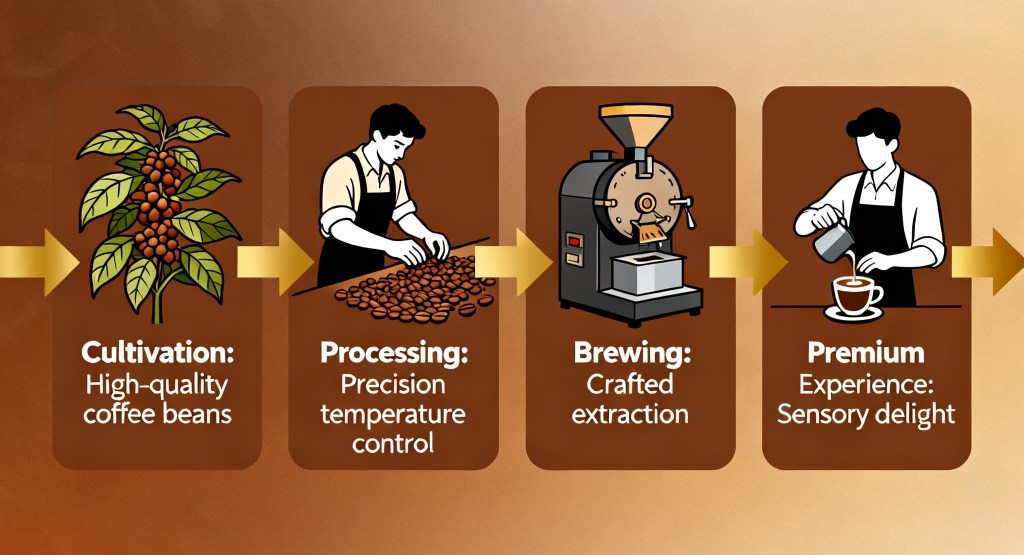
Take coffee as an example. Coffee beans are a commodity—sold cheaply by weight. But Starbucks built a global empire by reimagining the value creation chain:
Create Value – Not just coffee, but an “experience.”
Deliver Value – Comfortable stores, friendly baristas, consistent branding.
Capture Value – Customers pay a premium for a crafted coffee experience.
By elevating each step of the chain, Starbucks transformed a commodity into a lifestyle product.
The Components of a Value Creation Chain
1. Inbound Logistics – How raw materials or inputs are sourced.
Example: A clothing company choosing sustainable fabrics.
2. Operations – The process of turning inputs into finished goods/services.
Example: Toyota’s lean manufacturing system, which maximizes efficiency and reduces waste78.
3. Outbound Logistics – How the product gets to the customer.
Example: Amazon’s hyperefficient delivery system ensures rapid order fulfillment910.
4. Marketing & Sales – Communicating value and persuading customers.
Example: Nike’s powerful branding campaigns create global demand.
5. Service – Support and followup that enhance customer loyalty.
Example: Apple’s Genius Bar enhances continual support.
Why Value Creation
Clarity – It shows where your business actually adds value.
Efficiency – It reveals bottlenecks and wasted effort.
Differentiation – It highlights areas where you can stand apart.
Profitability – Strong value creation chains drive sustainable profits.
Quick Exercise: Map Your Value Creation Chain
1. Write down each step from idea to customer delivery in your business.
2. For each step, ask:
How much value does this add for the customer?
Can we improve or innovate here?
3. Circle one area where improvement could have the biggest ripple effect.
For example:
A consultant might realise they add enormous value in the “service” stage through ongoing support, and could monetise it with a retailer.
A retailer might see that “outbound logistics” (delivery times) is hurting value, and invest in faster shipping.
Research by leading business consultancies confirms: companies that continually optimize their value chains often report sharper improvements in efficiency and profitability than those who do not. While specific margin improvements can vary by industry and initiative, operational value chain improvements are a core driver of sustainable growth.
Final Thought
The value creation chain is more than a business model—it’s the DNA of how you serve customers and generate profit. By strengthening every link, you not only deliver better outcomes but also build resilience, loyalty, and longterm growth.
As Steve Jobs once said:
“You’ve got to start with the customer experience and work back toward the technology—not the other way around.”
Start with value, build the chain around it, and the profits will follow.
 Get Success